
Ukraine still needs to accumulate at least 600 million cubic meters of fuel before the start of the heating season. However, the government is already actively discussing the possibility of opening gas exports to the European market. Sales are to be strictly controlled and, according to preliminary data, should not exceed 15% of domestic production.
The moratorium on gas exports has been in effect almost since the beginning of the full-scale invasion. Supporters of its lifting will point to a surplus of gas in the commercial market and the need to support private producers.
Among the main concerns is that resuming exports could potentially affect preparations for the next heating season. After all, gas reserves for the winter are still insufficient, and Russian shelling of production facilities seems to be intensifying.
Serhiy Barbu, journalist Add LB.ua as a preferred
source in Google
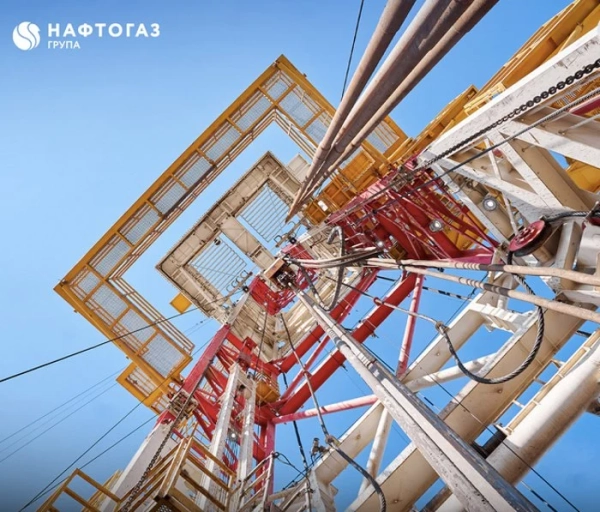
Photo: facebook/Naftogaz Group Gas production facility
Potential Gas Exports Amid Russian Strikes on Production
The government is considering allowing controlled gas sales abroad starting this autumn. LB.ua learned this from its own sources. However, no final decision has been made yet, and it will depend, in particular, on the situation with Ukrainian production under Russian attacks.
Gas exports have been banned since 2022, as the state attempted to maximize security against wartime risks.
Advertising
The Association of Gas Producers of Ukraine also confirms the absence of a government decision at this time. They state that potential exports should not harm energy security. Industry players and the Cabinet of Ministers are currently discussing very limited export options.
This means that the volume of gas sold abroad could be that which exceeds the country’s current needs.
“The key point is that the state fully controls the entire process—from the moment a decision is made on the right to export to the ability to stop it in case of risks to energy security,” says Artem Petrenko, the association’s executive director.
He claims there are several benefits for the country. Most importantly, producers will receive funds to restore facilities damaged by Russians. (This refers to gas exports specifically by private companies).

Photo: gmk.center Artem Petrenko
At the same time, Artem Petrenko adds that exports should not affect the rate of gas injection into storage facilities or the fulfillment of the government’s winter reserves plan.
“To stimulate investors, the export ban for companies must be lifted. No one will invest in the development of production if the investor cannot operate in the European market. But exports do not apply to situations where Ukrainian consumers experience shortages. It is only possible when the government’s requests for creating reserves in underground storage facilities are met,” explains energy expert Gennadiy Ryabtsev.
Discussions about resuming gas exports are ongoing against the backdrop of government statements about an extremely challenging upcoming heating season. Russia is currently focusing its attacks primarily on Ukrainian gas production, postponing strikes on the electricity sector until autumn-winter.
For instance, the production facilities of “Ukrgasvydobuvannya” have already suffered more shelling in the first seven months of this year than in all of 2025. This is reported by the company’s chief executive officer, Yuriy Tokarchuk.
The intensity of the attacks is increasing: in just one week, Russians fired drones and missiles at Naftogaz facilities 13 times. The operation of some infrastructure has been halted.
Photo: finclub.net Director of Ukrgazvydobuvannya Yuriy Tokarchuk
Read also: Since the beginning of the year, Russia has attacked Naftogaz facilities almost 300 times.
Parallel to the attacks on production, Ukraine has been hit by a new disinformation campaign. Anonymous Telegram channels have started spreading messages claiming that the state might face “gas supply schedules.” However, this is technically impossible.
“In case of a critical situation, entirely different mechanisms are employed. Consumption is reduced, or large industrial enterprises are disconnected. Combined heat and power plants (CHPs) are switched to backup fuels, or the temperature of the heat carrier is lowered. Gas pressure in the networks is reduced to the minimum permissible level, but the gas is not completely shut off. Do not succumb to panic and do not help enemy manipulators spread hype,” explains Viktoriia Voytsitska, a member of the Supervisory Board of the We Build Ukraine Analytical Center.
Has Ukraine Stocked Enough Gas for Winter?
The state has already accumulated 14 billion cubic meters of gas in underground storage facilities, says Volodymyr Omelchenko, director of energy programs at the Razumkov Centre. The expert explains that another 600 million cubic meters need to be injected before the start of the heating season. Current reserves are already more than a third larger than last year.
“The goal by October 20 is to reach the baseline benchmark of 14.6 billion cubic meters. Current domestic production is sufficient to cover needs without imports,” stated Volodymyr Omelchenko.
The specialist says Ukraine can potentially open gas exports because a surplus has formed in the private producers’ market. For example, industrial and business consumption of resources has halved compared to pre-2022 figures. This is easily explained: most large enterprises were concentrated in the east and south of the country. Now, some are occupied, and others are close to the front line.
Advertising
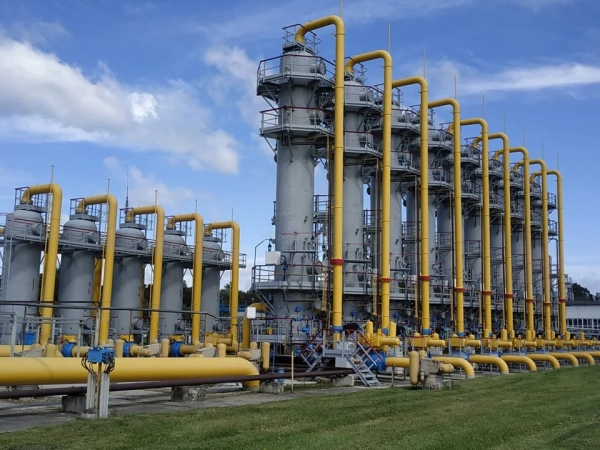
Photo: reform.energy One of Ukraine’s gas storage facilities
If private companies have nowhere to sell gas within Ukraine, prices also decrease due to surpluses. This pulls down the revenues of these enterprises. If the situation worsens, it could potentially lead to production cutbacks, says Volodymyr Omelchenko.
“Natural gas consumption in Ukraine fluctuates around 15-20 million cubic meters per day. Gas imports have been almost non-existent this month. Current production volumes allow for covering consumption and injecting most of it into UGS. Injection volumes are slightly, but still lower than the average for the corresponding month over the last 3 years,” describes the situation in the industry former Minister of Energy Olha Buslavets.
Gas from Ukraine could be in demand on the European market. Continental countries are actively purchasing fuel for the winter. And there are problems with this: currently, European storage facilities are only 60% full, which is almost a quarter lower than in recent years.
The gas price is influenced by the situation in the Arab (Persian Gulf) countries, especially concerning LNG supplies from Qatar.
The idea of re-allowing the export of Ukrainian gas has been discussed several times, explains ExPro gas market analyst Mykhailo Svishcho. The expert adds that before the full-scale invasion, Ukraine mostly engaged in re-exports. That is, in the summer, they purchased resources from the European market at lower prices, and in the winter, they sold them back at higher prices. Foreign companies were actively involved in this, by the way.
“Exports should be allowed because it corrects the market. But the pertinent question is: should this be done now? In the past, arguments against it prevailed. However, it is also necessary to understand that in wartime conditions, when our gas infrastructure is subjected to numerous attacks from Russia, the issue of exports is always political and sensitive,” believes Mykhailo Svishcho.
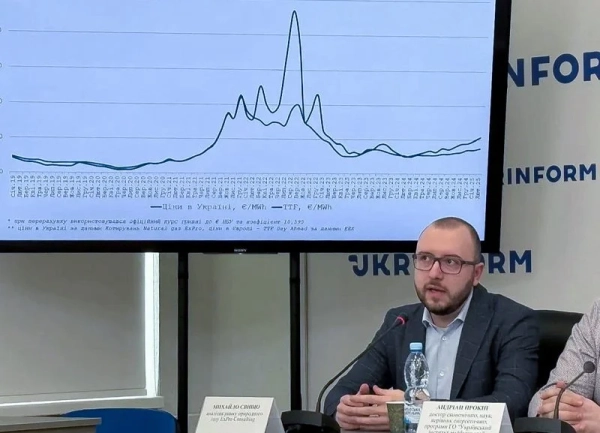
Photo: Ukrinform Mykhailo Svishcho
Currently, the mechanisms for potential exports are changing. The government is consulting with the Gas Transmission System Operator, “Naftogaz,” the Ministry of Energy, and private market players. According to ExPro, the Cabinet of Ministers is discussing the possibility of allowing no more than 15% of domestic production to be sold abroad.
“It will not make a significant difference in terms of winter preparations,” states Mykhailo Svishcho.
Preparation for the Heating Season: From Cautious Optimism to Evacuation Lists
Advertising
As winter approaches, the central and local authorities issue increasingly contradictory statements.
On one hand, President Volodymyr Zelenskyy states that all Ukrainian thermal power plants have sustained damage. Such a statement from the head of state is surprising, to say the least, given that most thermal power plants have been destroyed by Russians multiple times already.
On the other hand, the Ministry of Energy reports on planned preparations for the heating season. However, problems exist, both with strengthening air defense and with building generation capacity.
And then there are the recent government changes, where it was decided to split the Ministry of Communities and Territories Development again. The motivation behind these actions is still difficult to fully understand. Although the former ministry played a key role in winter preparations, particularly concerning the implementation of resilience plans.
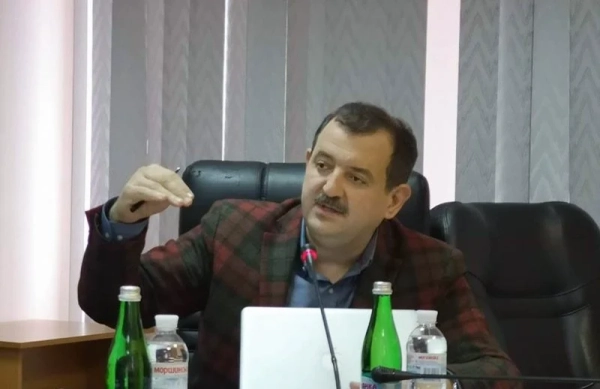
Photo: enefcities.org.ua Sviatoslav Pavliuk, Executive Director of the Association ‘Energy Efficient Cities of Ukraine’
“If the government hadn’t been changed without reason two months before the start of the heating season, there would be slightly fewer grounds for concern. Appointing the head of ‘Naftogaz’ as prime minister, the prime minister to the position of head of ‘Naftogaz,’ and starting to divide the recently merged ministry of regional development—one must possess exceptional management talent for that,” says Sviatoslav Pavliuk, executive director of the Association ‘Energy Efficient Cities of Ukraine’.
Currently, it is very difficult to assess the level of winter preparedness: most figures and data are classified due to security risks (though not always justifiably). According to former Ukrenergo head Volodymyr Kudrytskyi, as of July, only 700 MW of new gas generation was operational in the energy system.
“This is in the context of a deficit of up to 7000 MW last winter,” he writes.
Statements from local authorities are often equally confusing. For example, Kyiv finally managed to get its Resilience Plan approved. However, Mayor Vitaliy Klitschko, as usual, complains about the central government, lamenting allegedly unfair funding. But at the same time, he reports that damaged energy facilities have already been restored by 65%.
In parallel, the city authorities are compiling evacuation lists for residents with limited mobility, lonely elderly people, or individuals with disabilities. The city aims to be prepared for the worst-case scenario, hence the need to form such lists.
Ukraine has exhausted its power reserve from 2022, believes Olena Pavlenko, president of the DiXi Group Analytical Center. The expert adds that the country is now balancing on the edge between electricity production and consumption. And the only way out of the situation is the construction of new generation and energy modernization.
Advertising
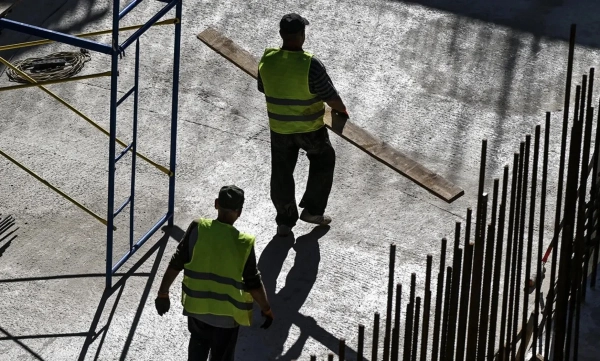
Photo: Dmytro Smolienko / Ukrinform
“We should not deceive ourselves or others, saying that we are ready for winter and everything will be fine. Precisely because we are balancing on the edge, in the event of constant attacks, we will fall into a generation deficit; the only question is how often and how severely,” says Olena Pavlenko.
The expert highlights three main factors that will influence the winter situation: the frequency and intensity of Russian strikes, the speed of repair of damaged facilities, and temperature conditions. According to preliminary forecasts, winter might be warmer than the previous one. Regarding the speed of recovery, Olena Pavlenko notes that it is the responsibility not only of the government but also of communities. Cities must prepare backup generation for the social sector.
“The force and frequency of attacks: it seems they will increase approximately from October, as the Muscovites have well identified our weak points. In this context, I poorly understand the international partners who do not consider options for protecting our large generation facilities (nuclear and thermal power plants) with their military forces, or at least compelling the IAEA to engage in the protection of nuclear power plants effectively, rather than just shrugging their shoulders,” adds the president of DiXi Group.
Conversely, Volodymyr Omelchenko, director of energy programs at the Razumkov Centre, believes that Ukraine still has a power reserve. Although the expert adds that the risks for the coming winter are very serious. He estimates the amount of newly built gas generation at 1.5 GW. Omelchenko is confident that even the complete destruction of Ukraine’s thermal generation will not lead to a collapse of the energy system.